

Our Services → Stress Testing
Stress Testing
Cardiac stress testing in Melbourne and Gippsland
Melbourne Cardiology Group provides cardiac stress testing across Melbourne and Gippsland to assess how your heart responds to physical exertion and identify concerns that may not be visible at rest. We offer exercise stress echocardiograms, which combine ultrasound imaging with ECG monitoring, and cardiac stress ECGs, which measure the heart’s electrical activity during exercise.
Learn more about each test, including preparation, what to expect and possible risks.
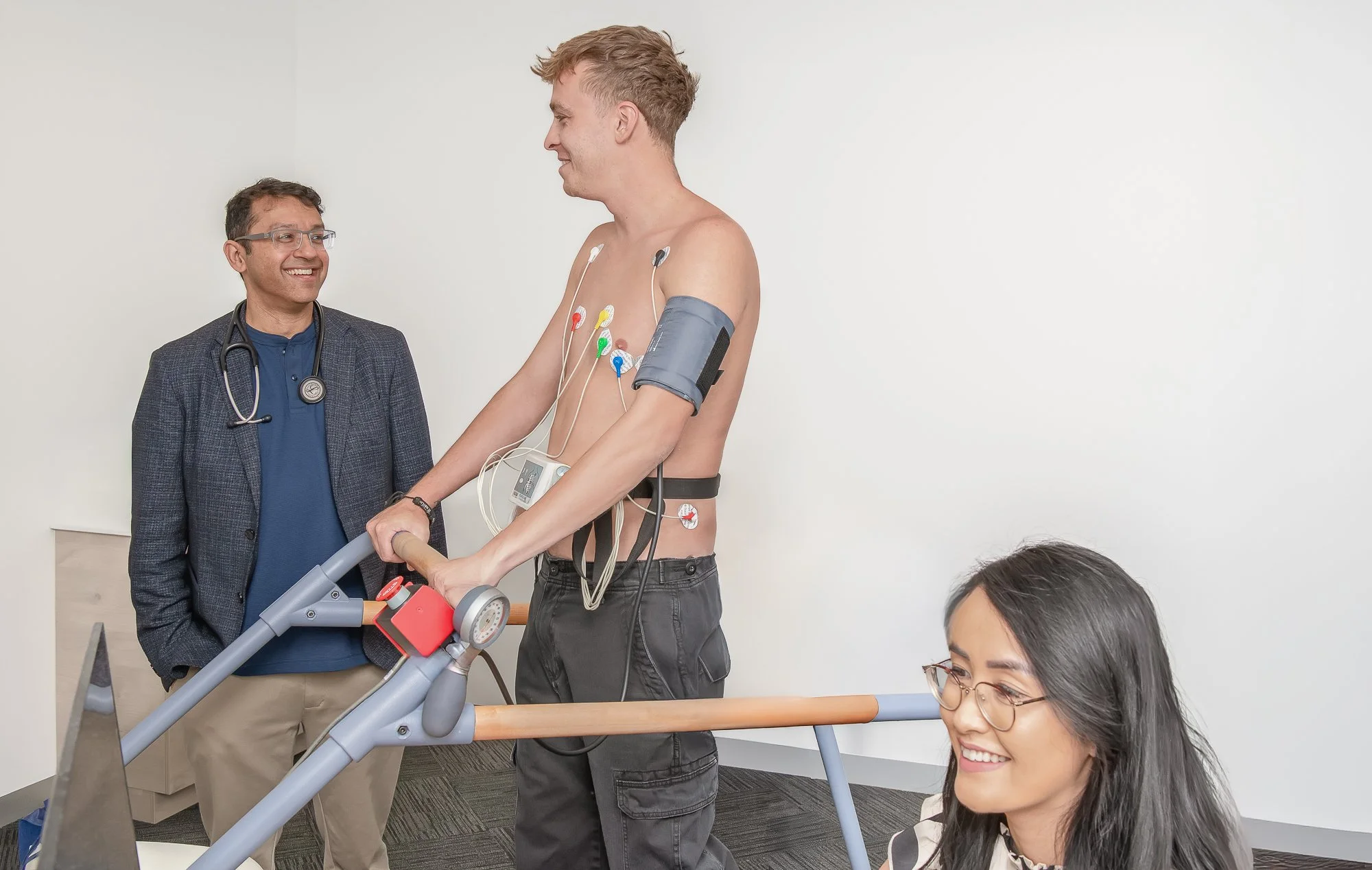
Exercise Stress Echocardiogram (Stress Echo)
An exercise stress echocardiogram, also known as a stress echo test or heart stress test, assesses how your heart functions under physical exertion. At Melbourne Cardiology Group, we provide expert stress echo testing across Melbourne and Gippsland to evaluate heart health and exercise safety.
-
An exercise stress echocardiogram is a non-invasive diagnostic test that combines ultrasound imaging with ECG monitoring. Unlike a standard echo, this test compares how your heart muscle pumps at rest versus immediately after exercise on a treadmill. It uses safe ultrasound technology with no radiation.
-
Your doctor may recommend a heart stress test for several reasons:
Checking for Coronary Heart Disease: Identifying reduced blood supply (ischaemia) during physical activity.
Surgical Clearance: Assessing cardiac fitness before undergoing major surgery.
Licensing Requirements: Fitness-to-drive assessments for commercial or private licenses.
Exercise Safety: Evaluation before starting a high-intensity gym program.
Valve & Lung Assessment: Monitoring heart valve function and lung pressures under stress.
-
Clothing: Wear comfortable exercise clothes and sturdy walking or running shoes.
Fasting: Do not eat or drink for 2 hours before your test (small sips of water are okay).
Medication (Beta Blockers): Unless advised otherwise, cease beta blocker medication 48 hours before your test. These medications regulate heart rate and can prevent the heart from reaching the target rate needed for an accurate test.
Common Beta Blockers include: Atenolol, Bisoprolol, Carvedilol, Metoprolol, and Propranolol. (See our Full FAQ for a complete list).
-
The appointment takes approximately 30 minutes. You will walk on a treadmill while our medical team monitors your heart. At Melbourne Cardiology Group, every test is performed by an accredited senior cardiac sonographer and an experienced cardiologist to ensure the highest level of accuracy and safety.
-
An exercise stress echo is very safe. You will experience the normal shortness of breath and tiredness associated with treadmill exercise, but you are monitored by a specialist medical team throughout. Because we use ultrasound, there is zero radiation exposure.
-
If you cannot use a treadmill due to joint pain or mobility issues, please let us know. We can perform a Dobutamine Stress Echocardiogram, which uses a specialised medication to safely mimic the effects of exercise while you remain resting comfortably.

Book an echocardiogram
Book online or email us your valid referral and one of our staff members will contact you.
Questions?
call us on 03 9964 4848

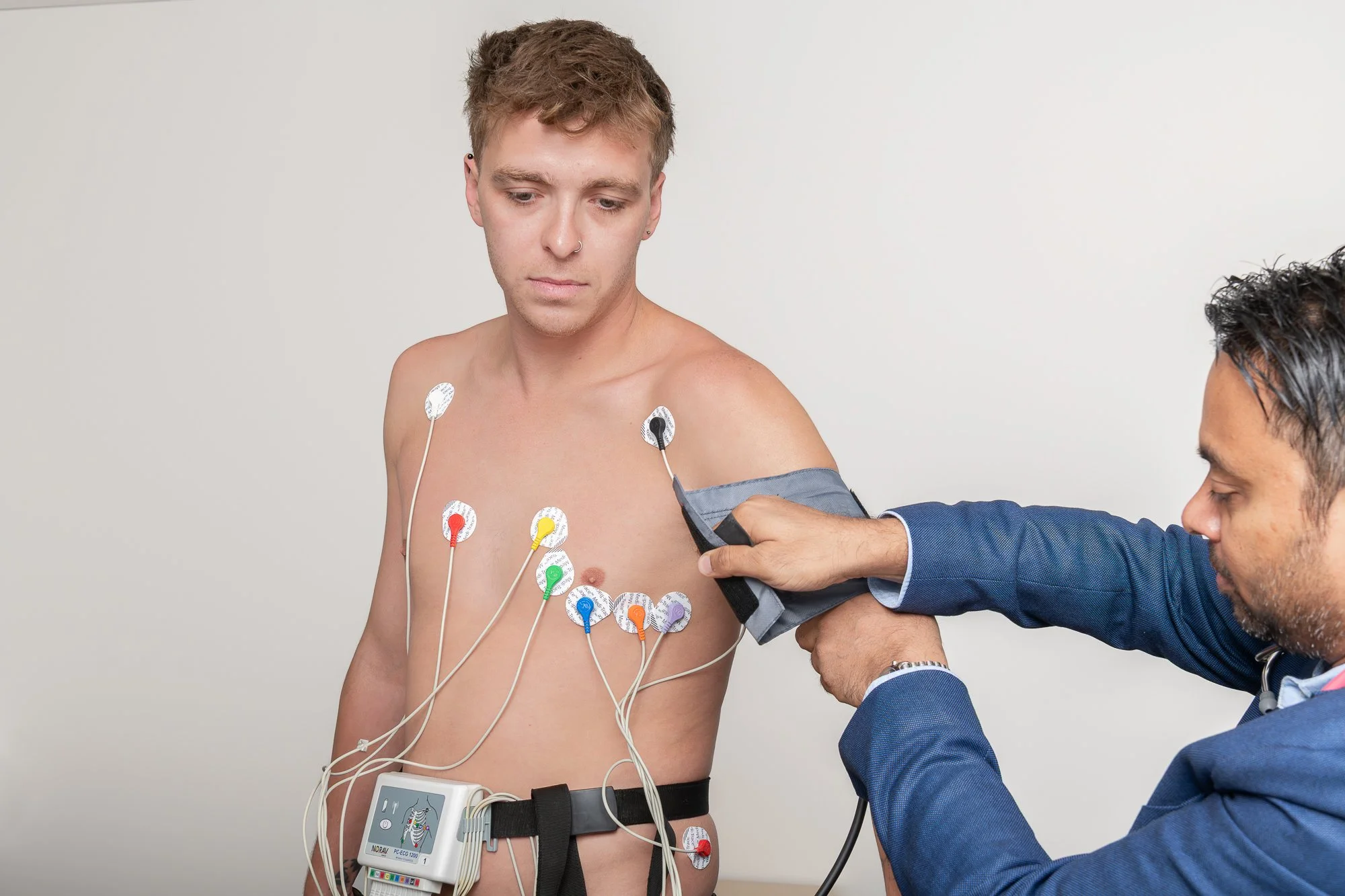
Cardiac Stress ECG (Treadmill Heart Test)
A Stress ECG, also known as a treadmill heart test, measures your heart’s electrical activity while it is under physical stress. At Melbourne Cardiology Group, we offer expert cardiac stress testing across Melbourne and Gippsland to help identify heart issues that may not be visible at rest.
-
A Stress ECG is a diagnostic tool used to monitor your heart’s rhythm, rate, and electrical patterns during exercise. As you walk on a treadmill, your heart works harder and requires more oxygen. This test helps our cardiologists detect potential blockages in the arteries or abnormal heart rhythms (arrhythmias) that only appear during physical activity.
-
Your doctor may refer you to our cardiac stress test clinic for several clinical reasons:
Checking for Blockages: Assessing for coronary artery disease or ischaemia.
Rhythm Assessment: Investigating palpitations or irregular heartbeats triggered by exercise.
Heart Rate Recovery: Monitoring how quickly your heart returns to its resting rate.
Surgical & Exercise Clearance: Determining if your heart is fit for surgery or a new high-intensity gym program.
Licensing Requirements: Evaluating fitness to drive for commercial or private vehicle licences.
-
Clothing & Footwear: Wear comfortable exercise attire and sturdy walking or running shoes (no sandals or heels).
Fasting: Do not eat or drink for 2 hours prior to your test (small sips of water are okay).
Medication (Beta Blockers): Unless advised otherwise, cease beta blocker medication 48 hours prior to your test. These medications can prevent your heart rate from reaching the necessary level for an accurate result.
Examples include: Atenolol, Metoprolol, and Bisoprolol (see our full medication list below).
-
While both involve a treadmill, they offer different levels of detail:
Stress ECG: Measures electrical activity. It is a reliable, fundamental screening tool often used for general fitness assessments.
Stress Echocardiogram (Stress Echo): Combines the ECG with ultrasound imaging. This allows the specialist to physically see the heart muscle and valves in motion, making it much more accurate at detecting subtle blockages.
Your GP or cardiologist will advise which test is most appropriate for your clinical history.
-
A Stress ECG is a routine and safe procedure. You may feel out of breath or tired, similar to a brisk walk or jog. Our medical team monitors your blood pressure, heart rate, and ECG readings throughout the test and recovery period to ensure your safety.
-
Common beta-blockers in Australia include:
Atenolol: Tenormin, Noten, Tensig
Bisoprolol: Cardicor, Emcor, Bisoprolol-WGR, Bicor
Metoprolol: Betaloc, Lopresor, Minax, Metrol
Nebivolol: Nebilet, Nebimel, Nebol
Propranolol: Inderal, Deralin, APO-Propranolol
Sotalol: Sotacor, Sotoger
Timolol: Timoptic, Blocadren
Pindolol: Visken, Barbloc
Carvedilol: Dilatrend, Dicarz, Dilasig, Coreg
Labetalol: Trandate, Presolol
(Refer to your medication packaging or call our clinic if you are unsure).
-
The exercise portion typically lasts 5 to 15 minutes, starting at a slow walk and gradually increasing in speed and incline.
-
Yes. No sedation is used, so you are safe to drive once your heart rate returns to normal (usually 10–15 minutes after the test).
-
A detailed report is typically sent to your referring GP or specialist within 1 week. Please notify staff if your results are needed urgently.
Book a cardiac stress ECG
Book online or email us your valid referral and one of our staff members will contact you.
Questions?
call us on 03 9964 4848